If you have been searching for physiotherapy or pain management options in Preston, you may have come across both "dry needling" and "acupuncture" being mentioned, sometimes in the same breath. Both involve fine needles inserted into the skin, and at a glance they can look similar. But the theory behind each practice, the way points are chosen and the setting in which each is typically delivered are quite different.
This article explains what each technique actually is, where the confusion comes from, and what Rehab Genius Health in Preston offers so you can make an informed choice about what to book. It is written as general information, not as a substitute for an individual assessment with a registered healthcare professional, and it does not claim that either technique works better than the other in general terms.
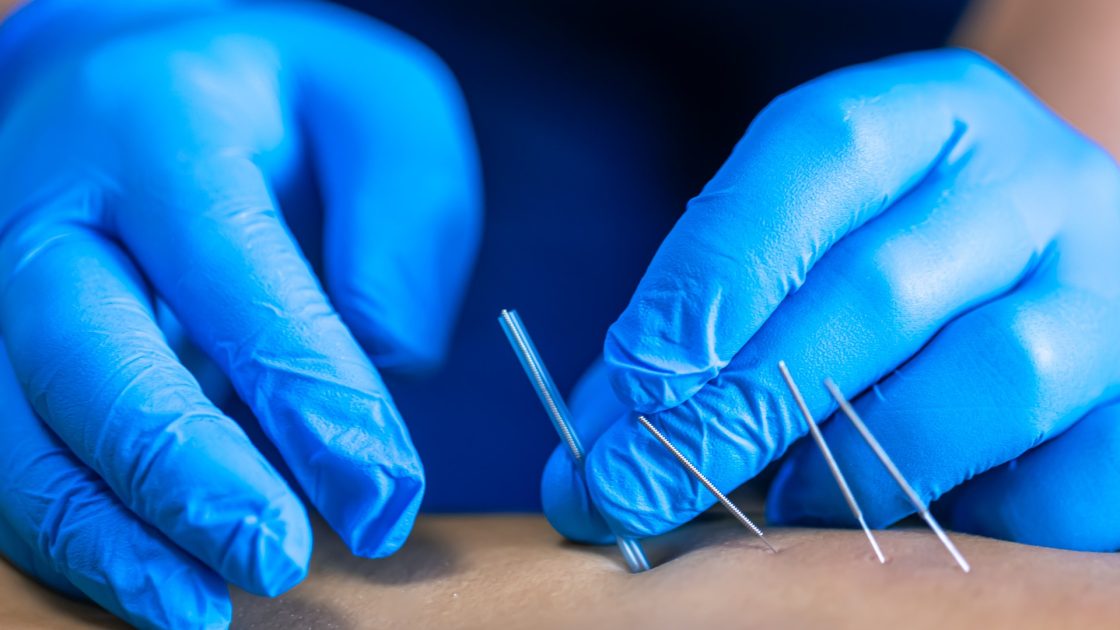
Dry needling is a technique that uses a fine, sterile, single-use filament needle inserted through the skin into a muscle or area of soft tissue. It is called "dry" needling because nothing is injected through the needle, unlike an injection technique where a substance would be delivered into the tissue.
The rationale behind dry needling comes from a Western, biomedical understanding of the musculoskeletal system. Practitioners aim the needle at what is often described as a myofascial trigger point, a tender or tight band that can be felt within a muscle. The theory is that this targets localised muscle tension and the movement restriction associated with it, rather than that it is proven to resolve either. The needle placement is based on where that tight band sits in the muscle itself, identified through physical assessment of the area causing discomfort or restricted movement.
Acupuncture has its origins in Traditional Chinese Medicine (TCM), a system of practice that developed over a long history in China and has since spread worldwide in various forms.
Traditionally, acupuncture is explained through concepts such as Qi, often translated as a form of vital energy, which is thought to flow through the body along pathways known as meridians. In this traditional framework, needles are placed at specific acupuncture points that sit along these meridians, with the intention of influencing the flow of Qi along that pathway.
It is worth stressing that this is a different theoretical model entirely from the one behind dry needling. Acupuncture's traditional points are mapped according to meridian theory, not according to where a muscle happens to be tight on a given day for a given person. Rehab Genius Health Preston does not offer acupuncture, and this section describes acupuncture as a general practice only, for comparison, not as something available at the clinic.
The confusion between dry needling and acupuncture is understandable, since both can use a similar-looking fine filament needle inserted into the skin. That similarity in the tool is part of why the two get mixed up in conversation. But the thinking that guides where the needle goes, and why, is not the same.
Dry needling follows an anatomical and neuromuscular logic. A physiotherapist assesses the muscle and soft tissue, finds a trigger point directly in the muscle associated with the person's symptoms, and places the needle there, in that muscle, based on that assessment.
Acupuncture follows a meridian-based logic rooted in TCM theory. Point selection relates to the traditional meridian maps rather than to muscle assessment findings specific to that individual's presenting movement restriction.
Another difference worth knowing is who typically delivers each technique in the UK and in what setting. Dry needling is most often delivered by a physiotherapist as part of a musculoskeletal assessment process, within a physiotherapy clinic. Acupuncture is practised in a range of settings by practitioners trained specifically in that discipline, following its own body of theory and training.
The language used to describe each technique also tends to differ, which is a useful clue if you are reading about them elsewhere. Dry needling is usually described in terms borrowed from anatomy and physiology, such as muscle, trigger point, soft tissue and neuromuscular. Acupuncture is more often described in the language of its own tradition, such as Qi, meridian and acupuncture point. Seeing which set of terms a page or a practitioner uses can be a reasonable indicator of which approach is actually being discussed, since the two sets of terms rarely overlap.
Neither approach is presented here as superior to the other. They are simply built on different foundations, developed in different traditions, for different purposes, and that is the core distinction worth understanding before you book anything.
Rehab Genius Health in Preston offers dry needling as part of its physiotherapy services. The clinic does not offer acupuncture.
Dry needling at the clinic can be booked as a standalone session, or it can be used as one technique within a broader physiotherapy treatment plan alongside other approaches, depending on what an assessment identifies as appropriate. As with any technique involving needles, it is only used after an assessment of suitability for that person, and with their informed consent.
Dry needling at Rehab Genius Health Preston is delivered by an HCPC-registered physiotherapist, meaning the person carrying out the technique is a physiotherapist registered with the Health and Care Professions Council, the UK regulator for the profession.
Your appointment begins with a suitability check. The physiotherapist will ask a series of health questions and take a brief look at the area in question before any needle is involved. This also helps establish whether dry needling is suitable as a standalone session, or whether it is being considered as one part of a wider physiotherapy plan alongside other treatment.
Before anything happens, the physiotherapist will explain what the technique involves, in plain terms, and will ask for your informed consent before using a needle. Nothing proceeds without that conversation taking place first.
You are free to decline dry needling at any point, whether that is before the session starts or partway through. If you choose not to go ahead, or decide to stop, the rest of any wider physiotherapy plan continues as normal and is not affected by that decision.
Where dry needling does go ahead, a fine, sterile, single-use needle is used. No other instrument is involved. It is disposed of immediately after the session and is never reused. Nothing is injected at any point.
What happens after a session can vary from one person to the next, and your physiotherapist will talk you through what to expect in your particular case before you leave.
There are a few things worth mentioning when you book or at your assessment, so the physiotherapist can judge whether dry needling is appropriate for you. These include a bleeding disorder, taking blood thinners, pregnancy, any skin problem in the area that might be treated, or a fear of needles. This list is not exhaustive, and your HCPC-registered physiotherapist will ask you directly for anything else they need to know before going any further.
Dry needling tends to come up in conversation for people dealing with localised muscle tightness or restricted movement that a physiotherapist has assessed and identified a relevant trigger point for. Because it sits within a wider physiotherapy assessment process, whether it is suitable for a particular person depends on their individual presentation, history and the findings of that assessment, rather than being a technique offered on a one-size-fits-all basis.
It is also worth knowing who dry needling is unlikely to suit, at least without extra caution. People with a fear of needles, a bleeding disorder, those taking blood thinners, or anyone with a skin condition affecting the area in question would need this discussed carefully at assessment before the physiotherapist decides whether to proceed. Pregnancy is another factor a physiotherapist would want to know about and plan around rather than overlook.
If you are in Preston or nearby areas such as Ashton-on-Ribble and are weighing up whether dry needling might be relevant to what you are experiencing, an assessment with a physiotherapist is the way to find out, rather than deciding from a description online alone.
Is dry needling the same as acupuncture? No. Both use a fine filament needle, which is where the confusion often comes from, but the theory behind each is different. Dry needling is based on a Western, musculoskeletal understanding of trigger points within a muscle. Acupuncture is based on the traditional Chinese Medicine concept of Qi flowing along meridians.
Does Rehab Genius Health offer acupuncture? No, Rehab Genius Health Preston offers dry needling, not acupuncture. This article discusses acupuncture only to explain how it differs from dry needling, since the two are often confused. The clinic's own service is dry needling, delivered as part of its physiotherapy offering.
Who delivers dry needling at Rehab Genius Health Preston? Dry needling at the clinic is delivered by HCPC-registered physiotherapists.
Will dry needling be used in every physiotherapy session? Not necessarily. It may be offered as a standalone session or as one part of a wider treatment plan, but only after an assessment has established that it is a suitable technique for the individual, and only with their consent.
If you would like to find out whether dry needling is relevant to what you are experiencing, the best next step is to Book an assessment with the team at Rehab Genius Health in Preston.

