Stiff shoulders. A back that catches when you bend. A neck that won't turn as far as it used to. If you've been told to rest and see how it goes, you'll know that waiting rarely gets you closer to answers.
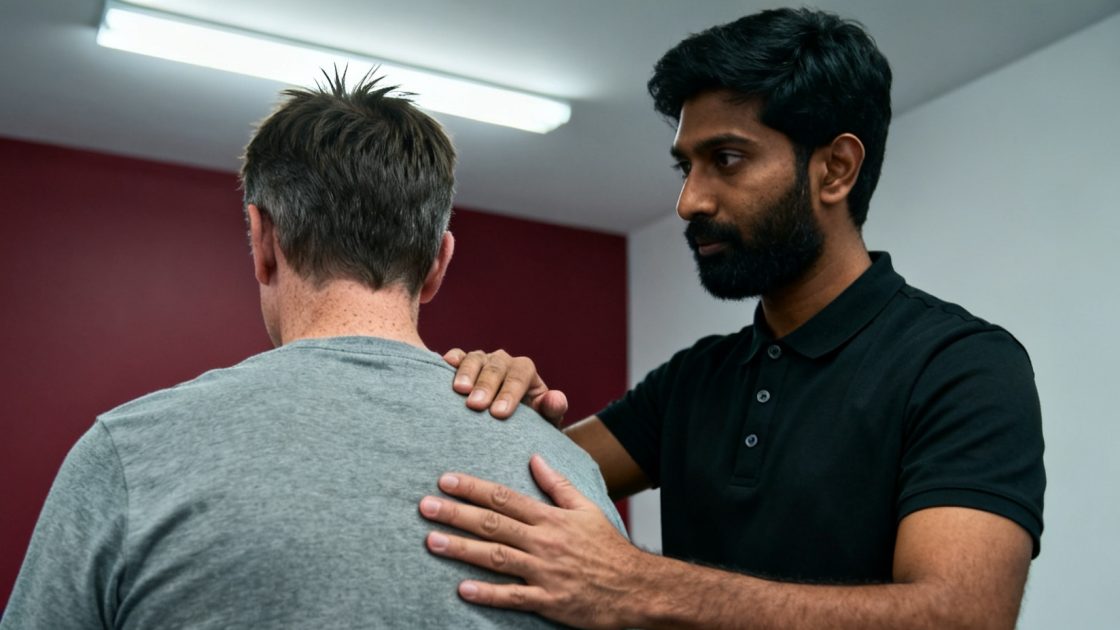
Manual therapy is hands-on treatment, applied by a physiotherapist, designed to work with your body's movement rather than around it. At Rehab Genius Health in Preston, it forms part of a wider plan built around how you actually move, not just where it hurts.
This article explains what advanced manual therapy involves, who it's for, and what a visit to our Preston clinic looks like.
Advanced manual therapy is a hands-on approach to assessing and treating how your body moves. Your physiotherapist uses their hands to assess joints, muscles and soft tissue, then applies targeted techniques to address what they find. It's a skilled, responsive form of treatment, not a fixed routine applied the same way to everyone.
A typical session starts with your physiotherapist listening to your history and asking about your daily life. What aggravates things. What eases them. What you're struggling to do. This conversation shapes everything that follows.
The hands-on element is not separate from the rest of your care. It sits alongside movement advice and exercises you'll do outside the clinic. Manual therapy is one part of a plan, not a standalone fix.
Throughout treatment, your physiotherapist will explain what they're doing and why. You should always understand the reasoning behind the approach being used on you. Informed patients tend to engage more fully with their own recovery.
People come to Rehab Genius Health with a wide range of issues. Persistent lower back pain that flares with sitting or lifting. Sciatica that runs down the leg and won't settle. Shoulders that have lost range overhead. Necks that feel locked after long hours at a desk.
Some patients arrive after a specific injury. A fall, a strain, an awkward twist. Others have no single moment they can point to. Their pain has simply built up over weeks or months of repeated strain, poor sleep, or reduced activity.
What tends to unite them is frustration. They've often been told to rest and wait, without anyone properly assessing what's actually going on. Manual therapy starts from a different premise: that movement problems deserve a proper look, not a guess.
If you're dealing with stiffness, restricted movement, or pain that changes with activity, manual therapy may be relevant to your situation. Your physiotherapist will confirm this during assessment rather than before it.
Assessment comes before any hands-on technique. Your physiotherapist needs to understand how your body is moving, where it's restricted, and how your symptoms behave, before deciding how to approach treatment.
This usually involves watching how you move, testing specific joints and muscles, and asking detailed questions about your symptoms and history. Nothing is applied on autopilot. The picture your physiotherapist builds during assessment directly informs the hands-on techniques they choose.
Your input matters throughout this process. You know your body and your daily demands better than anyone else in the room. Telling your physiotherapist clearly what helps, what doesn't, and what matters most to you shapes the direction of your plan.
Treatment is also reassessed as you go. Your physiotherapist will check how you're responding and adjust the approach accordingly. Manual therapy at Rehab Genius Health is not a one-size-fits-all technique, it's a plan that develops alongside you.
Rehab Genius Health is based in Ashton-on-Ribble, Preston. If you're local to Preston or the wider Lancashire area, this is where your assessment and hands-on treatment will take place.
Your first visit is focused on understanding you, your movement and your goals. Expect questions about your symptoms, your daily routine and what you're hoping to be able to do again. This groundwork matters as much as any hands-on technique that follows.
Wear or bring clothing that allows you to move freely, since your physiotherapist will likely ask you to demonstrate certain movements. Bring any relevant history too, including previous scans or letters, if you have them.
For details on session length, how many visits might be appropriate, or anything specific to your circumstances, your physiotherapist will talk you through this when you book. Every plan is built around the individual in front of them.
Hands-on treatment is rarely the whole story. What you do between sessions plays a real role in how your plan progresses. Your physiotherapist will typically give you movement or exercise guidance to support the work done in clinic.
This might include specific stretches, strengthening exercises, or simple changes to how you move during the day. The aim is to build on what's addressed hands-on, so progress isn't left entirely to the time you spend in the clinic.
Consistency matters more than intensity. Small, manageable changes to how you move day to day, done regularly, tend to complement manual therapy better than occasional bursts of effort.
Your physiotherapist will check in on how you're getting on with this side of your plan. If something isn't working for your routine, say so. The plan should fit around your life, not the other way round.
Manual therapy is applied by a physiotherapist as part of a wider assessment and treatment plan, targeting specific joints, muscles and movement patterns identified during assessment. It's guided by clinical reasoning about your particular movement problem, rather than general relaxation.
Many people with sciatica seek out manual therapy as part of their approach to managing symptoms and movement. Whether it's appropriate for you depends on assessment, since sciatica can have different underlying causes. Your physiotherapist will talk you through this after assessing you.
Requirements can vary depending on your individual circumstances. The best way to get a clear answer is to ask the team at Rehab Genius Health directly when you book.
Loose, comfortable clothing that allows easy movement is a sensible choice, since you may be asked to demonstrate certain movements during assessment. Trainers or flat shoes are usually more practical than heels or restrictive footwear.
Manual therapy is used for both recent injuries and longer-standing movement or pain issues. Your physiotherapist will assess your specific history and current movement to work out an appropriate approach for your situation.
If pain or stiffness is limiting how you move, a proper assessment is the place to start. Book your manual therapy assessment with Rehab Genius Health in Preston, or call 01772 287388 to speak with the team directly.

