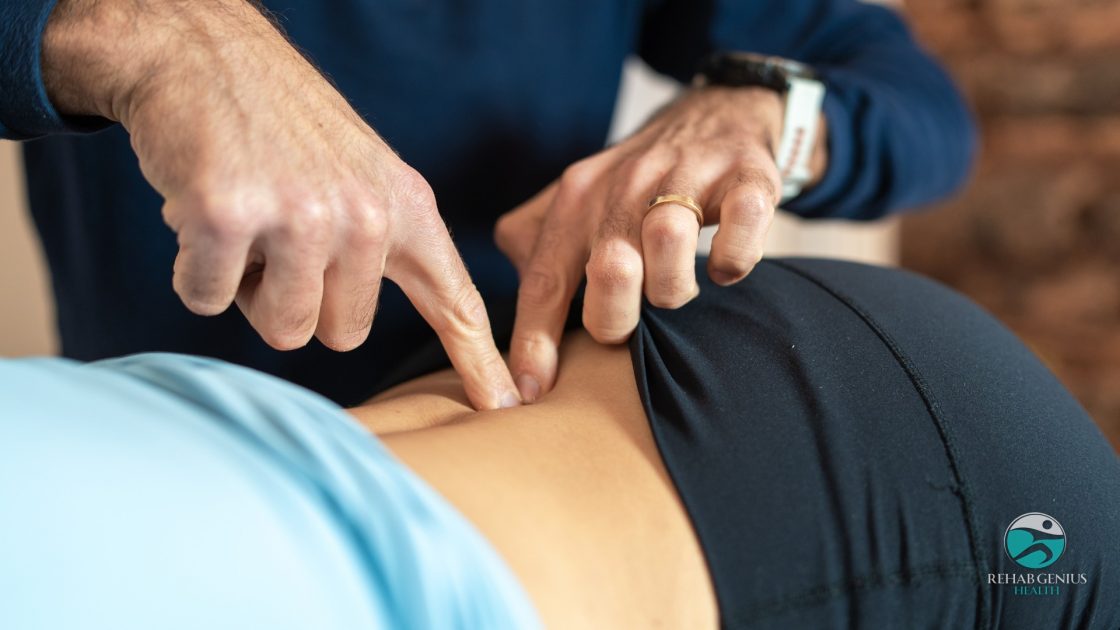
Lower back pain is one of the most common reasons people look for help with their body. It can come on after an awkward lift, a long week at a desk, or for no obvious reason, and it can be worrying when it affects sleep, work or weekends in the Ribble Valley.
Most episodes of lower back pain are not serious and often involve irritated muscles, joints or discs. Even so, it helps to understand what is going on, to know what a good assessment looks like, and to recognise the small number of situations where you need urgent medical care.
If you are searching for back pain physio Clitheroe, this guide explains how a physiotherapist approaches the problem, what a plan may include, and when to seek help. Rehab Genius Clitheroe opens on Tuesday 3 November 2026 at 17 King Street, with weekday evenings until 9pm, and you can find the clinic details on the Rehab Genius Clitheroe clinic page.
The lower back, known as the lumbar spine, is a strong and flexible structure made of bones (vertebrae), discs between them, joints, ligaments and many layers of muscle. Because it carries so much load and moves in so many directions, it is easily irritated. Common contributors include:
Often, several of these factors combine. A flare-up can feel dramatic even when the cause is a sensitive but otherwise healthy back, which is why a clear explanation matters as much as any exercise.
Sciatica is a term for pain that travels from the lower back or buttock down the leg, sometimes as far as the foot. It is usually caused by irritation or pressure on a nerve root, which is the point where a nerve leaves the spinal column. The sciatic nerve is the longest nerve in the body.
Sciatica can feel different from person to person. Some people describe:
You can have sciatica with very little back pain, or significant back pain with no leg symptoms at all. If you are looking for sciatica physio Clitheroe, a physiotherapist can help work out whether your symptoms fit a nerve root irritation pattern or are coming from somewhere else, such as muscles or joints that refer pain into the leg. Sciatica can settle over time with sensible management, and a proper assessment helps guide what to do next and flags anything that needs further attention.
A good assessment is a conversation as well as a physical examination. At Rehab Genius, which is part of a group that includes HCPC-registered physiotherapists, the aim is to understand you as well as your pain. Here is what an assessment may involve.
1. History. You will be asked when the pain started, what makes it better or worse, how it affects sleep, work and daily life, and whether you have had it before. Questions about your general health are included too, partly to screen for anything that needs a different route of care.
2. Movement checks. The physiotherapist will watch how you bend, turn, stand up and walk. They may note which movements reproduce your symptoms and which feel easier. This helps identify the patterns that are irritating your back.
3. Strength testing. Muscle strength in the legs and trunk can be checked for any weakness.
4. Nerve and reflex checks. If you have leg symptoms, the physiotherapist may test reflexes, skin sensation and muscle power in the legs. These simple checks help show whether a nerve root is involved.
5. Goals. What matters to you, whether sleeping through the night, lifting a grandchild or getting through a shift? Your goals shape the plan.
6. Explanation. You should leave understanding what is likely causing your symptoms, what is reassuring, what to avoid worrying about, and what the next steps are.
You can book directly with Rehab Genius. You do not need a GP referral. If you would like to see how the clinic works before you call, the Clitheroe clinic page has the location and contact details.
There is no single programme that suits everyone, which is why the assessment comes first. Depending on what is found, a plan may include some or all of the following:
The plan should be reviewed as you progress, and changed if something is not helping.
You do not have to wait for an appointment to start looking after yourself. For most non-serious back pain, these simple steps are widely recommended:
If your symptoms are getting worse rather than gradually settling, or if you are unsure, get it checked.
Most back pain is not an emergency. However, a very small number of people develop a serious condition called cauda equina syndrome, where the bundle of nerves at the base of the spinal canal is compressed. It needs urgent assessment in hospital.
Call 999 or go to A&E immediately if you have back pain together with any of the following:
Do not wait to see whether it improves.
Contact NHS 111 or your GP promptly if you have back pain with:
These signs are uncommon, but they are the reason a careful history is part of every physiotherapy assessment.
Do I need a GP referral to see a physiotherapist?
No. You can book directly with Rehab Genius Clitheroe without seeing your GP first. If your assessment suggests you need other medical input, you will be advised on the right next step.
Is it safe to exercise when my back hurts?
In most cases, gentle movement is helpful and encouraged. Some discomfort during activity can be expected, but pain that is sharp, spreading down the leg or getting steadily worse is worth discussing with a physiotherapist. A tailored plan helps you judge what is appropriate for you.
Will I need a scan?
Not always. Lower back pain is often assessed from your history and a physical examination, and your physiotherapist will tell you if they feel further investigation is needed.
Can sciatica go away on its own?
It can settle gradually, though the pace varies from person to person. An assessment can help you understand your symptoms and manage them with more confidence.
Back pain can be unsettling, but understanding it is a good first step. A thorough assessment, a clear explanation and a sensible, gradual plan may help you feel more confident about moving. If you are looking for back pain physio Clitheroe, Rehab Genius Clitheroe opens on Tuesday 3 November 2026 at 17 King Street, Clitheroe, with appointments on weekday evenings until 9pm, which may suit those who work during the day.
To book, call 01200 405373 or visit the Rehab Genius Clitheroe clinic page. No GP referral is needed.
This article is for general information only and is not a substitute for medical advice. If you are worried about your symptoms, speak to a qualified healthcare professional. If you have any of the urgent warning signs described above, call 999 or go to A&E immediately.

