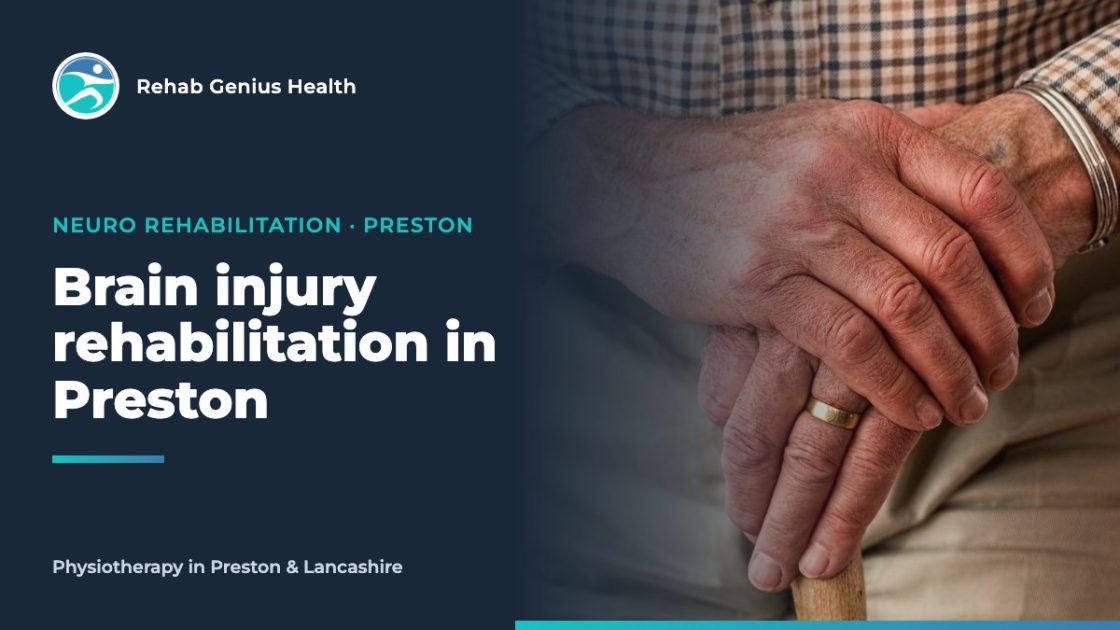
A brain injury, whether from an accident, a fall, an illness, or another cause, can affect the body in ways that are not always visible from the outside. Alongside cognitive and emotional changes, which other professionals support, many people are left with physical effects such as reduced balance, altered coordination, changes to walking, or persistent fatigue. Brain injury rehabilitation in Preston usually involves several professionals working together, and physiotherapy is one part of that picture, focused specifically on movement, balance and physical function.
This page sets out what physiotherapy support for brain injury rehabilitation actually involves: what a first assessment looks at, what sessions typically work on, and how sessions are paced around fatigue and concentration. Every brain injury is different, so this is intended as a general guide rather than a fixed programme.
Acquired brain injury (ABI) is the umbrella term for any injury to the brain occurring after birth, and it includes both traumatic and non-traumatic causes. A traumatic brain injury (TBI) is one type of ABI caused by an external force, such as a fall or a road traffic collision, while non-traumatic ABI can result from causes such as illness, infection or a lack of oxygen. Concussion is a form of TBI, often described as mild, but its physical effects, particularly on balance and coordination, can still be significant for some people.
Within brain injury rehabilitation, physiotherapy concentrates on the physical side of things: how the body moves, balances and coordinates itself. It is important to be clear that physiotherapy does not treat the brain injury itself. It does not replace medical, neurological or specialist rehabilitation care. Instead, it sits alongside that care, working on movement and physical function while the wider care team addresses other aspects of the injury.
The physical effects of a brain injury vary widely depending on which part of the brain was affected and how. Some people notice changes to balance, finding it harder to stand steadily or to adjust when their footing shifts. Others notice changes to coordination, such as difficulty judging distance when reaching for an object, or a change in how smoothly the limbs work together.
Dizziness is common after a brain injury or concussion, and this can be linked to the vestibular system, the part of the inner ear and brain that helps control balance and spatial orientation. Muscle tone, strength and walking patterns can also change, and fatigue often makes all of these physical symptoms feel more pronounced later in the day or after periods of concentration.
A first physiotherapy assessment for brain injury rehabilitation begins with a conversation. The physiotherapist will ask about the nature of the brain injury, any diagnosis from a neurologist or hospital team, current symptoms, and what a typical day looks like, including how fatigue affects movement and concentration.
From there, the physiotherapist carries out a physical assessment, which may include:
The physiotherapist then uses this information to put together a personalised treatment plan, agreed with the person and, where appropriate, their family, that sets out what physiotherapy sessions will focus on.
Sessions are built around the specific physical effects identified at assessment. The following areas are commonly worked on, though not every session covers all of them.
Sessions may include standing balance tasks, controlled weight shifting from one leg to the other, and exercises that combine movement with attention, such as walking while carrying an object or responding to an instruction. Coordination work often targets the arms and hands as well as the legs, using tasks that require controlled, deliberate movement.
The physiotherapist observes walking patterns closely, looking at step length, symmetry and how the body responds to different surfaces. Sessions may involve walking practice on flat ground, on slightly uneven surfaces, or around obstacles, and may include guidance on the use of a walking aid where one is in use.
Targeted exercises address specific muscle groups affected by the brain injury, alongside practice of everyday movements such as standing up from a chair, reaching for objects, or turning safely. The aim is to work on the physical building blocks needed for these movements.
Where dizziness is linked to the vestibular system, the physiotherapist may use specific vestibular physiotherapy techniques, including gaze stabilisation exercises, which involve controlled eye and head movements, and habituation exercises, which gradually introduce movements that provoke dizziness in a controlled way. Triggers for dizziness are also discussed and monitored.
Fatigue after a brain injury is often different from ordinary tiredness, and it can affect physical movement as well as concentration. Physiotherapy sessions for brain injury rehabilitation are paced accordingly: sessions may be shorter, built around rest breaks, or structured so that more demanding tasks come earlier before concentration drops. The physiotherapist keeps a close eye on signs of fatigue during a session and adjusts activity and pacing in response.
Brain injury rehabilitation rarely involves just one professional. A neurologist typically oversees the medical picture, while a GP coordinates ongoing care and referrals. Occupational therapy addresses daily living skills and equipment needs, and speech and language therapy supports communication, swallowing and related needs.
Physiotherapy sits within this multidisciplinary team, contributing the movement, balance and physical function element. Physiotherapists communicate with other members of the care team where relevant, so that physical goals are considered alongside the wider picture of a person's needs. Family members and carers are often part of these conversations too, since they can share observations about movement and fatigue between appointments.
At Rehab Genius Health, brain injury rehabilitation sessions are delivered by HCPC-registered physiotherapists at Barbury House, 8 Hardy Close, Ashton-on-Ribble, Preston PR2 2XP, or as a home visit across the Preston area, including Fulwood, Penwortham, Bamber Bridge, Lostock Hall and Leyland. Clinic and home sessions are simply two options for where the same physiotherapy support takes place, and either can be discussed when arranging an appointment.
To ask about physiotherapy support for brain injury rehabilitation, call 01772 287388.
Physiotherapy is not an emergency service. If you or someone you support experiences any of the following, seek urgent medical attention straight away:
Call 999 or go to A&E if any of these occur. If you are unsure whether a symptom needs urgent attention, call NHS 111 for advice.
A referral is not always required to arrange an appointment, though many people are guided towards physiotherapy by their GP, neurologist or hospital team as part of their wider brain injury rehabilitation. It is worth mentioning any existing diagnosis or medical involvement when you get in touch.
This depends entirely on the individual, the nature of the brain injury, and the stage of medical care they are at. There is no single right time that applies to everyone, and this decision should be guided by your medical team, including your GP or neurologist, alongside your own readiness.
Yes. Family members and carers are welcome to attend physiotherapy sessions for brain injury rehabilitation. Their observations about movement, fatigue and daily activity between appointments are often useful, and being present can help them understand what a session involves.
Physiotherapy can assess the physical effects of concussion, including balance and dizziness, and can work on these through targeted exercises where appropriate. This may involve vestibular assessment and coordination checks, alongside advice on pacing activity around symptoms.
No. Physiotherapy is one part of a wider care team and does not replace the role of a neurologist, GP or specialist rehabilitation team. It focuses specifically on movement, balance and physical function, working alongside the medical and multidisciplinary care already in place.
Brain injury rehabilitation is a team effort, and physiotherapy contributes the movement, balance and physical function element within it. Sessions are built around an individual assessment, paced with fatigue and concentration in mind, and can involve family members who support day-to-day life. If you would like to discuss physiotherapy support for brain injury rehabilitation in Preston, you can view our new patient offer and book an assessment or call 01772 287388 to talk through what sessions might involve.

