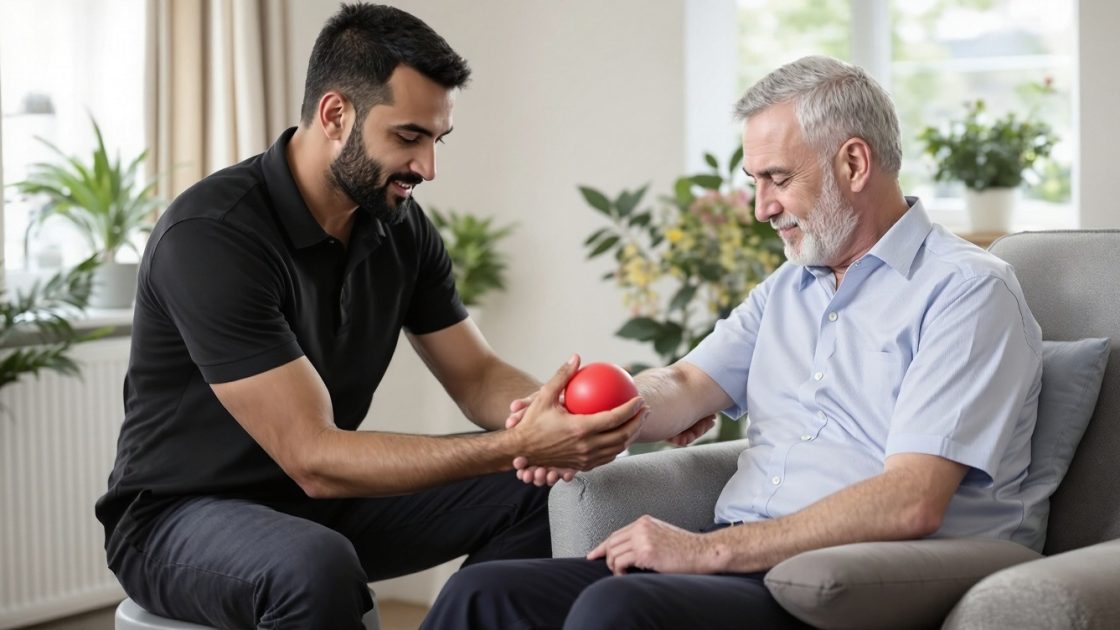
When a stroke or a neurological condition changes the way someone moves, many families in Lancashire begin searching for stroke physiotherapy in Preston, often not for themselves but for a parent, a partner or a grandparent. The search often starts around a hospital discharge date, or after a GP has mentioned physiotherapy as a next step. Rehab Genius Health provides stroke and neurological physiotherapy delivered in the person's own home, across Preston, Fulwood, Ashton-on-Ribble, Leyland, Bamber Bridge and South Ribble. Each session is led by an HCPC-registered (Health and Care Professions Council) physiotherapist, working in the rooms, on the stairs and around the furniture the person uses every day.
Rehab Genius Health's neurological physiotherapy covers stroke, Parkinson's disease, multiple sclerosis, and a range of balance, mobility and vestibular difficulties. These are the service areas the clinic works within, each requiring its own approach to assessment, and each session planned around the person in front of the physiotherapist rather than a fixed template.
For many families, the practical reality of getting to a clinic is the first obstacle. A short car journey can use up most of the energy a person has for the day, leaving little left for the session itself. Fatigue is a genuine clinical factor in stroke and in conditions such as multiple sclerosis and Parkinson's disease, and a taxi or bus journey followed by a walk from a car park is not a neutral start to an appointment. For someone using a wheelchair or a frame, transferring in and out of a vehicle, negotiating a clinic car park and finding accessible parking close to the entrance can turn a forty-minute appointment into a half-day undertaking.
Other families are managing this alongside work, other caring responsibilities or their own health, and a clinic appointment during the working day is simply hard to arrange around everything else. Home-based physiotherapy removes the journey from the equation. The physiotherapist arrives at the house, flat or bungalow, and the appointment begins there, without a car park, a waiting room or a walk down a corridor first.
A clinic gym is built to be generic. It has parallel bars set to a standard width, a flat floor with good lighting, and a set of practice steps built to a uniform rise. That generic quality suits some purposes, but it is not the staircase the person actually lives with. Every home has its own version of these everyday obstacles, and the honest case for home-based neurological physiotherapy is environmental: working in the place where the movement actually has to happen.
Take the staircase. It might have twelve steps or it might have sixteen, arranged in a straight flight or turning halfway up. The rise of each step, the depth of the tread, and which side the handrail is fixed to are all specific to that house, and none of them match a standard practice step in a gym. A physiotherapist working on that actual staircase is assessing the actual movement in the actual place it happens, rather than a different staircase built to a different specification.
The kitchen brings its own particular geography. The kettle sits at a certain height on a certain worktop, the everyday plates live in a cupboard that has to be reached, and the route from the cooker to the table crosses a specific stretch of floor, perhaps past a table leg or a rug edge. The bathroom has a specific transfer, whether that is stepping over the lip of a shower tray or lowering into and out of a bath, at a height, and with grab rails, or none, exactly as they are fitted today.
Thresholds and hallways matter too. A doorway threshold that sits slightly proud of the floor, a hallway narrow enough that a frame has to be angled through it, and a front door with a step down to the path all shape how someone actually moves through their own home. The armchair they sit in every evening has its own seat height and depth, different from a clinic chair, and the route from that chair to the front door, down the step and along the path to the pavement is the actual route that matters on the day someone needs to leave the house.
Working in that environment means the physiotherapist is assessing and working on the exact movements a person makes every day, in the exact place they make them, which is a different physical environment from a clinic gym.
A session begins with the physiotherapist observing how the person moves through their own space: rising from their usual chair, walking the route they take to the kitchen, or managing the first few stairs of their own staircase. This is an assessment of movement in its real context rather than a simulated version of it, and it gives the physiotherapist direct sight of the actual transfer, the actual stair, or the actual reach into a cupboard that causes difficulty.
Where it is clinically indicated, the physiotherapist provides hands-on work: guiding a joint through its range, facilitating a movement pattern, or providing manual support during a transfer while assessing what the body is doing. Alongside this, the physiotherapist writes an exercise programme built around the rooms, furniture and handrails the person already has: a set of sit-to-stand repetitions from their own armchair, practice on their own staircase with their own handrail, or balance work standing at their own kitchen worktop. The programme is written to be repeated between sessions, in the same setting it was set in, using the same furniture that will be there the next day and the day after.
Because the session happens in the home, a spouse, adult child or carer is very often in the room, rather than waiting outside or receiving a summary afterwards. They see the technique demonstrated on the actual staircase or the actual chair the person uses, which is a different thing from watching it demonstrated on equipment they will never see again. Questions can be asked in the moment: why the physiotherapist positions themselves on one side rather than the other, why the handrail side matters, or what to do if a transfer does not go as planned.
Where appropriate, family members or carers can practise the assisted movement themselves, under the physiotherapist's direct supervision, so that the technique is checked and corrected on the spot rather than attempted for the first time once the physiotherapist has left. This is entirely optional and is led by what the patient is comfortable with. Some people prefer to work with the physiotherapist alone, and that preference is respected; others prefer to have a familiar person present and involved, and the session is planned around that choice.
Home-based neurological physiotherapy from Rehab Genius Health is designed to complement an existing NHS care plan, not to replace it. Many of the people referred to the clinic are already under the care of an NHS physiotherapy team, a neurologist or their GP, and that relationship continues exactly as it is. The clinic asks that families keep their NHS team and GP informed of any private physiotherapy taking place alongside NHS care, so that everyone involved has a clear and current picture of what is happening.
This is a matter of good coordination rather than any suggestion that NHS provision falls short. An NHS care plan sets the overall direction of medical care, and home-based sessions sit alongside that plan as an additional, separate strand of physiotherapy in the person's own home. Anyone considering this route is encouraged to discuss it with their GP or their existing NHS team, and to continue attending any NHS appointments that are already scheduled.
Rehab Genius Health provides neurological physiotherapy in Preston and across the surrounding towns and districts, including Fulwood, Ashton-on-Ribble, Leyland, Bamber Bridge and South Ribble, subject to availability. Coverage is arranged on a case-by-case basis, and the clinic can confirm whether a particular address falls within reach of a home visit.
For families weighing up stroke physio at home against a clinic-based alternative, the starting point is usually a conversation rather than a decision made from a webpage. To find out whether your address is covered and to talk through what a first visit would involve, call 01772 287388.
Does a family member need to be in the room during a session? No. This is entirely optional and is led by what the patient is comfortable with. Some people choose to work with the physiotherapist alone, while others prefer a spouse, adult child or carer present, and either preference is accommodated.
How much space is needed in the home for a session? A session does not require a dedicated exercise space. The physiotherapist works with the rooms already available, whether that is a hallway, a staircase, a kitchen or a lounge, and the equipment used is kept minimal so it fits around existing furniture.
Can this run alongside NHS physiotherapy? Yes. Home-based sessions are designed to sit alongside an existing NHS care plan, and families are asked to keep their NHS team and GP informed of any private physiotherapy taking place at the same time.
Which conditions are covered? The service covers stroke, Parkinson's disease, multiple sclerosis, and balance, mobility and vestibular difficulties. Each session is planned individually by an HCPC-registered physiotherapist around the person and the specific difficulties they are describing.
How can I find out if my area is covered? Coverage across Preston, Fulwood, Ashton-on-Ribble, Leyland, Bamber Bridge and South Ribble is arranged subject to availability. The most direct way to check a specific address is to call 01772 287388.
Where someone lives, the number of stairs in their hallway, or how far their front door is from the pavement should not be the deciding factor in whether they can be seen by a physiotherapist. Home-based neurological physiotherapy exists because where you receive treatment should never be the reason someone struggles to access support. For families in Preston, Fulwood, Ashton-on-Ribble, Leyland, Bamber Bridge and South Ribble weighing up the practicalities of stroke physiotherapy in Preston, working with an HCPC-registered physiotherapist in the home removes the journey from the equation and puts the actual staircase, the actual kitchen and the actual armchair at the centre of the work.
To arrange a first visit, book a new patient consultation.

