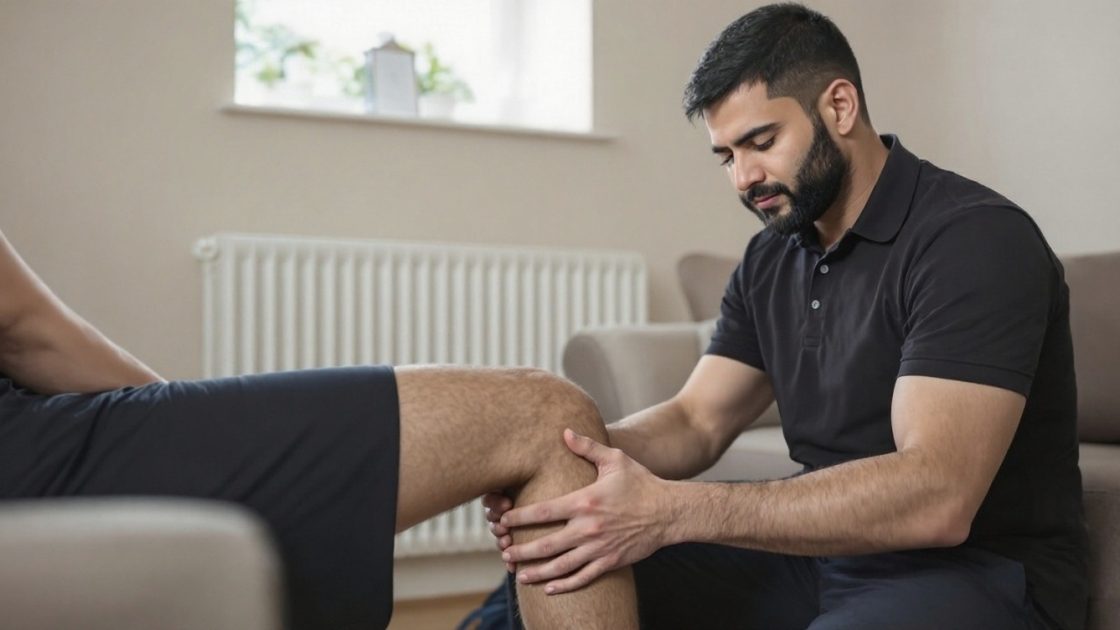
You have been discharged from hospital after a significant operation, perhaps a joint replacement, spinal surgery, or a cardiac procedure. Now you are at home, and getting to a clinic appointment is a great deal harder than it was a month ago. Mobility and logistics both work against you, and that is a practical problem, not a personal failing.
At Rehab Genius Health we understand the importance of minimising disruption between hospital discharge and ongoing care. Our mobile service is built to bridge that gap. For people across Preston and Lancashire, post-surgical physiotherapy at home means the appointment comes to the house rather than the other way round, and it is arranged around the plan your surgical team has already set rather than alongside it or instead of it.
In those first weeks after surgery, when support and guidance are most in the diary, even small trips can feel difficult. The physical effort of reaching a clinic, or of managing public transport and doorways, is considerable when you are already tired. Our service offers continuity of care by bringing physiotherapy to the house, where it is easier to keep an appointment without arranging transport, which is often a significant concern after an operation.
A fifteen or twenty minute trip to a clinic can appear manageable and yet present genuine obstacles in those early weeks at home. There is the initial step down from the front door, and uneven ground to consider. Lowering yourself into a car seat demands careful movement, and getting out again at the other end requires the same care. Then comes finding a parking space, and the walk across a car park that is larger than it looked, before sitting in a waiting room on a chair that is not the right height. The return trip repeats all of it, by which point you are genuinely tired. When there are stairs at home and no downstairs bathroom, the whole day has to be planned around that too. Someone also has to drive, which usually means someone rearranging their work.
When a physiotherapist from Rehab Genius Health arrives for a first home visit in Preston, they come with portable assessment and treatment equipment, so the full assessment can be carried out in your own home.
From the outset, understanding what guidance your surgical team has already provided is the priority. Any discharge notes or written instructions that came home from hospital should be to hand, so that everything the physiotherapist does sits inside the plan your consultant has set. The first session includes a conversation about what is proving difficult in an ordinary day, which rooms you are using, where you are sleeping, and how you are managing washing and dressing. They will look at the actual spaces involved, and the session itself usually happens wherever there is enough clear floor space, which is often the front room.
Family members or carers are welcome to be in the room, and it often helps if they are, because they are the ones there for the rest of the week. Nothing about the visit requires you to travel, and nothing requires you to be dressed for going out.
Preparing for a visit from your HCPC-registered physiotherapist is straightforward. Have any hospital discharge paperwork or written instructions to hand, including the name of your consultant or the ward, as these are useful references. During the week before the visit, make a note of the two or three tasks that have been most awkward, whether that is moving from one room to another or managing something ordinary around the house, because these details are easy to forget on the day.
Clear a path through the room by moving anything in the way, such as a coffee table or a rug. If you came home with a walking aid or any equipment, keep it in the room rather than out in the hall. Wear comfortable, loose-fitting clothing for the visit. Make sure someone can answer the door if getting to it is difficult. If a carer or family member would like to be there, arrange the visit for a time that suits them. Nothing here needs buying, and nothing needs setting up in advance.
Close coordination with your surgical team is central to how this works. We follow the guidance set by your healthcare providers and adapt our support within those parameters. The surgical team leads, and the physiotherapist works inside that plan rather than changing it.
After leaving hospital, your diary may already be busy with follow-up appointments: a district nurse calling, a surgical follow-up, a wound check, a hospital-led rehabilitation programme, or a visit to the GP. A private home physiotherapy session fits into that landscape rather than encroaching on it. Those existing appointments remain the priority, and a home visit is arranged around them rather than competing for space in a diary that is already full.
Home visits are an addition to any ongoing NHS care plan, not an alternative to one and not a replacement for one, and they operate strictly within the parameters your surgical team set out on discharge. Anything you are unsure about, including whether extra input is suitable at this stage of your particular operation, is best clarified with your own consultant or hospital team, and asking them is an entirely reasonable step. Between sessions you will know when the next visit is due and have a number to call, so appointments can be moved when a hospital date lands on the same day.
Our physiotherapists are registered with the Health and Care Professions Council (HCPC), and they bring portable assessment and treatment equipment to a home visit, which allows a proper assessment to be carried out in the environment where the difficulty actually occurs. The mobile kit does not hold everything a clinic holds, and it is not meant to.
There are real advantages to attending a clinic in the right circumstances. A clinic holds specialist equipment that cannot be carried in a car, and it has space that a front room does not have. As getting out of the house becomes easier, moving from home visits to clinic appointments is a sensible step for many people rather than a backward one. A home visit is not a better version of a clinic appointment. It is a different arrangement that suits a particular set of circumstances, and the main circumstance is that leaving the house is hard at the moment. That changes over time, and the arrangement can change with it.
Looking at the particular features of your home allows the session to be built around the place you are actually living. Understanding how you move between the rooms you use every day makes it possible to look at the things that are proving awkward, in the place where they are proving awkward.
This individualised approach involves working closely with both patients and family or carers, who see the rest of the week. Bed height, chair height, the doorways you pass through, the route from the bedroom to the bathroom, and how you get in and out of a car are all part of the picture.
The core principles guiding the service stay the same across different operations, while the practical circumstances differ considerably from one person to the next.
After an orthopaedic operation such as a hip or knee replacement, the daily obstacles are often the stairs, the height of a chair, and getting in and out of a car. All of those sit inside the home, which is a useful place to look at them.
After spinal surgery, sitting for any length of time may be uncomfortable, including the drive to a clinic. That is precisely the trip a home visit removes, and seating and comfort at home can be looked at in the setting where they matter.
Recovery after a cardiac procedure is led by the cardiac team, and any physiotherapy input at home sits inside the programme they have set. Any specific detail or recommendation comes directly from that team, and the physiotherapist works to their guidance. Whether a home visit is suitable at this stage of your recovery is a question for them.
In every case, what is and is not appropriate for your particular operation is a question for your own surgical team.
You can arrange our services directly, and a referral is not required. That said, guidance from your GP or consultant helps align our support with the plan already in place, and speaking to them is always a reasonable thing to do.
Yes. Our service fits around logistical gaps without interrupting anything already arranged, and it supports continuity of care in the early period after discharge. It is an addition to an NHS pathway rather than a substitute for one.
Our physiotherapists follow the instructions given by your surgical team. Bring the paperwork to the first visit. Where your surgeon has set out what you should and should not be doing, that guidance stands, and we work within it rather than changing it. Anything you want clarified about those instructions is a question for your surgeon.
Appointment times depend on availability, and we arrange visits as promptly as we can. If you are unsure whether this is the right point in your own recovery to add a home visit, ask your consultant or hospital team first.
We provide services across Preston and the surrounding Lancashire areas, including Fulwood, Ashton-on-Ribble, Leyland, Bamber Bridge and South Ribble.
Returning to ordinary life after an operation is a personal matter, and the early period at home is when travelling is hardest. Our mobile physiotherapy service is arranged around that, bringing joint replacement physiotherapy at home, and support after spinal or cardiac surgery, to the place where the difficulties are actually happening. It works to the plan your surgical team has set, and it fits around the appointments you already have.
To talk it through, call us on 01772 287388. If you already know a home visit is what you need, you can arrange a home visit online. If you would rather ask a few questions first, the phone is the quickest route, and we are happy to answer them without any commitment either way.

